Ling in Japanese Kanji
Ling in kanji: 鈴 — one way to write Ling, with meanings you choose yourself, in the Japanese ateji (当て字) tradition.
In Japanese, Ling is usually written リン (rin)
鈴 is an artistic ateji — chosen for sound and meaning, not an official spelling.
For anything permanent, have a native speaker check it.
Reviewed by Hitomi Kuga, Japanese-language teacher
In Japanese, Ling is usually written リング (ringu)
鈴弘 is an artistic ateji — chosen for sound and meaning, not an official spelling.
For anything permanent, have a native speaker check it.
Reviewed by Hitomi Kuga, Japanese-language teacher
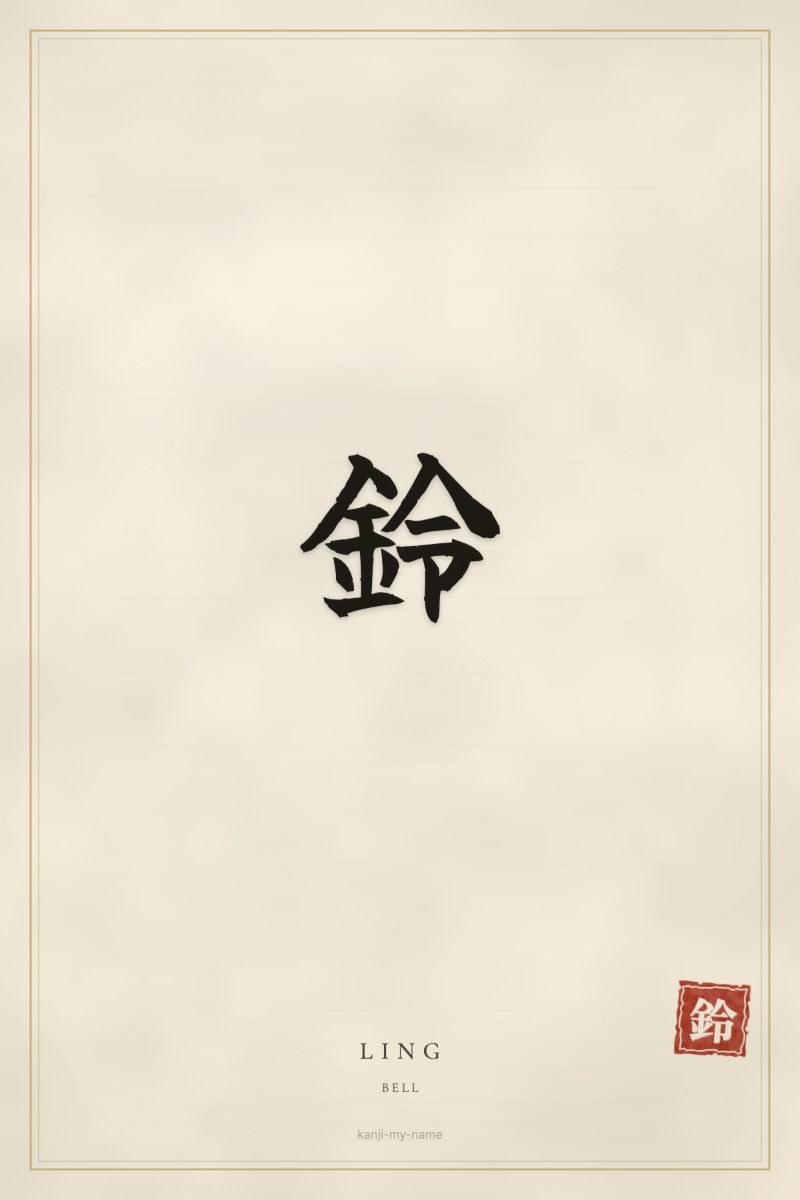
鈴 — “bell”
Ling sounds like rin in Japanese. Matching each sound to a kanji gives 鈴 — one of 3 possible kanji spellings of Ling. Every character below has the same or closest Japanese sound but a different meaning, so the final choice is yours.
Create your Ling kanji art — freeInstant download · your name never leaves your browser
How Ling becomes kanji
| Sound | Kanji | Meaning |
|---|---|---|
| rin | 鈴 | bell |
Every kanji choice for Ling
Pick a different character for any syllable — love, dreams, strength, light — and the art updates instantly in the generator.
“rin” — 3 kanji to choose from
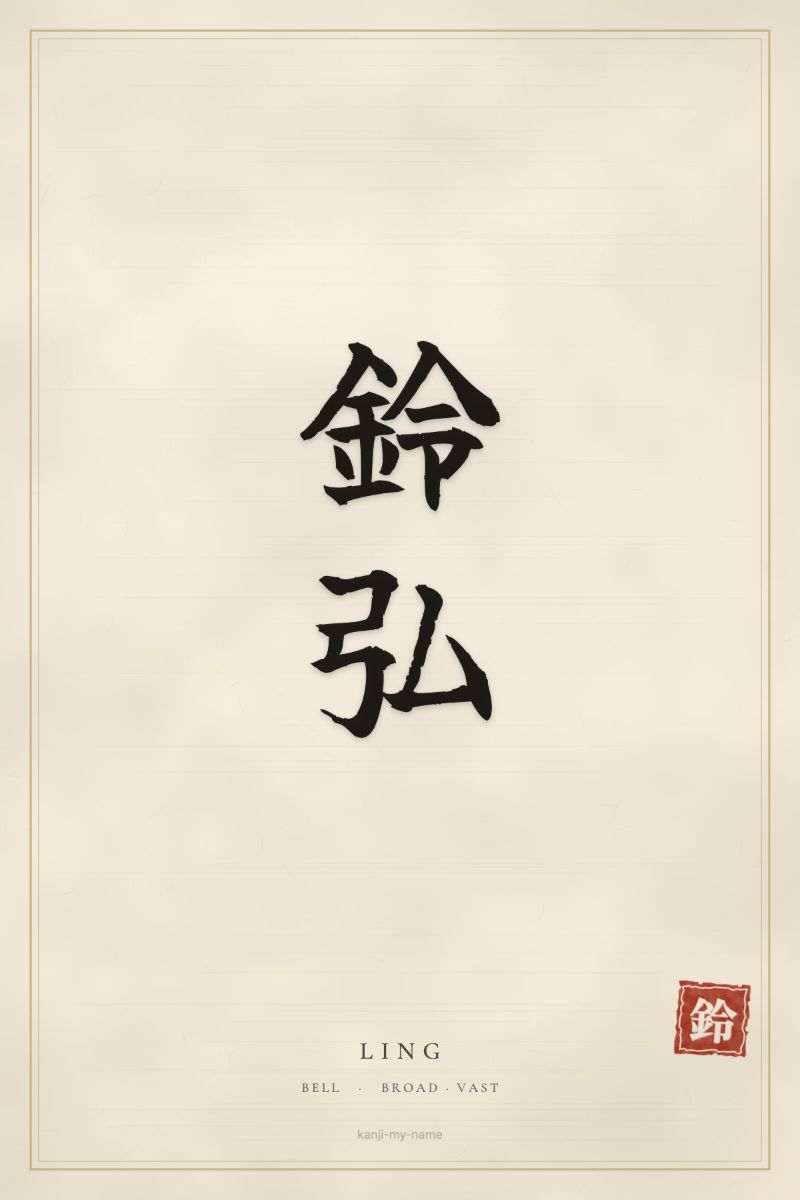
鈴弘 — “bell · broad · vast”
Ling sounds like rin · gu in Japanese. Matching each sound to a kanji gives 鈴弘 — one of 3 possible kanji spellings of Ling. Every character below has the same or closest Japanese sound but a different meaning, so the final choice is yours.
Create your Ling kanji art — freeInstant download · your name never leaves your browser
How Ling becomes kanji
| Sound | Kanji | Meaning |
|---|---|---|
| rin | 鈴 | bell |
| gu | 弘 | broad · vast |
Every kanji choice for Ling
Pick a different character for any syllable — love, dreams, strength, light — and the art updates instantly in the generator.
“rin” — 3 kanji to choose from
“gu” — 1 kanji to choose from
Tattoo, gift & wall art ideas
鈴 makes striking vertical calligraphy — a popular choice for a kanji name tattoo, a personalised Japanese name gift, or framed wall art. Because you can read this page, you (and your tattoo artist) know exactly what each character means — no mystery kanji.
Questions about Ling in kanji
There is no single official kanji for Ling. This is one sound-based ateji (当て字) option: 鈴, read as "rin", with the meanings "bell". You can swap a character for another with the same or closest Japanese sound: Ling has 3 possible kanji spellings in this generator.
It can be a starting point for a tattoo design. Because tattoos are permanent, we recommend having both the katakana (リン) and the kanji checked by a native Japanese speaker before committing.
Character by character, 鈴 reads 鈴 ("bell", read as "rin"). Together they sound like "Ling" while carrying the meanings bell.
Japanese uses four scripts side by side: kanji for meaning, hiragana and katakana for sound, and rōmaji for the Latin alphabet. A Japanese person writing a foreign name by ear reaches for katakana, which records the sound but carries no meaning — kanji is the meaning-based art form this site uses instead, in the ateji (当て字) tradition.
No — in everyday Japan, foreign names are written in katakana, which is why it's shown beneath every artwork here. The kanji version is ateji (当て字): an artistic portrait of a name chosen for sound and meaning, not an official translation, so anything permanent should be checked by a native speaker first.